News
Going for Innovation and Strong Small and Medium Enterprises
Nursing care extends beyond hospitals, even into the home. And it's not just a problem for the elderly. More people than you might think are "bedridden" at home, recovering from surgery and injury, disabilities, rehabilitation, and even postpartum recovery. It's crucial that not only the person receiving care, but also the caregivers, be comfortable. That's why "Mobe the Rest" exists." (Oh Su-han, CEO of Mobe)
Korean society is entering an era of "home care." A combination of factors, including a rapidly aging population, changing family structures, the burden of nursing costs, a shortage of hospital beds, and a growing aversion to nursing homes, is rapidly increasing the number of patients staying at home for extended periods of time rather than in hospitals. As a result, the home care market has emerged.
Beds, a key piece of home care furniture, are expanding their role from simply sleeping to becoming devices that connect healthcare and daily life. While still small, one company is tapping into this niche, targeting this growing demand. This is "Mobe the Rest," a home care bed brand launched this year by the motion bed manufacturer Mobe.
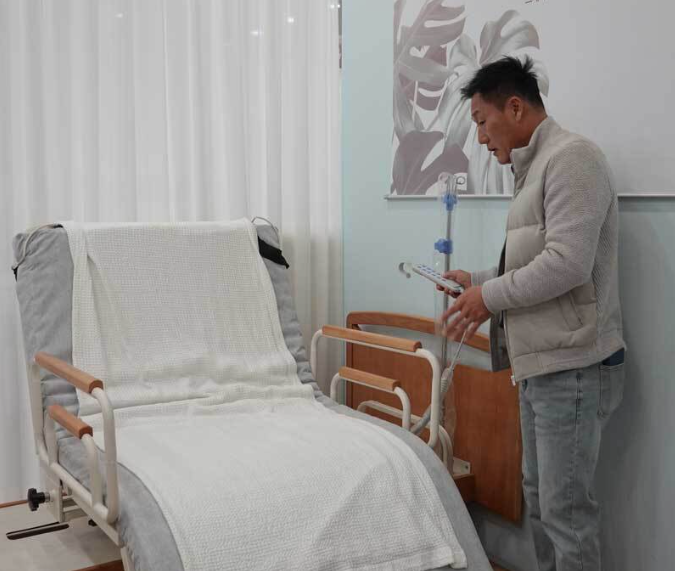
◆Motion Beds Targeting Home Care Emerge
Korea is poised to enter a super-aged society by 2025, with people aged 65 and over exceeding 20% of the population. Demand for home-based and community-based care, including home visits and nursing care, is also growing.
The home care market is also expanding. Beyond the elderly, the market now includes: patients discharged from hospitals and confined to bed; patients requiring care but unwilling to enter a nursing facility; and families who prefer home care due to the high cost of care.
A critical element in home care is the bed. However, there has been a lack of products that truly address the practical needs of home care. The bed market has long been divided into two categories: standard beds and hospital beds. This is precisely the gap that CEO Oh identified.
CEO Oh is a veteran with nearly 30 years of experience in the furniture industry. Having launched the motion bed brand Mobe in 2018, he is pioneering the market this year with the launch of Mobe The Rest, a home care brand. Mobe The Rest defines beds as "care infrastructure," not just sleep appliances, and aims to open a separate market for those requiring treatment and recovery at home.
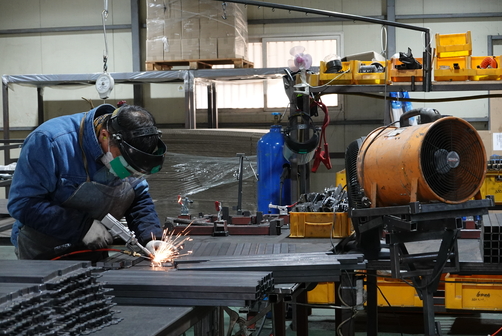
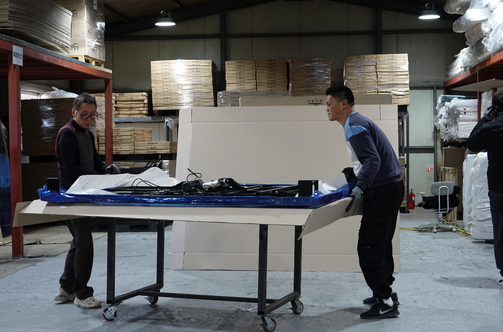
Mobe and Mobe The Rest's motion beds embody "Made in Korea" technology. The frame, motion structure, mattress production, and assembly are all performed in-house, without relying on outsourcing. This research-driven technology development allows for rapid feature upgrades. The company also holds related patents, including a "bed motion control system with multi-stage segmented operation modes" and a "folding motion bed structure." Recognized for its quality, Mobe has expanded its customer base to hospitals, postpartum care centers, and nursing homes, and sales have also expanded rapidly.
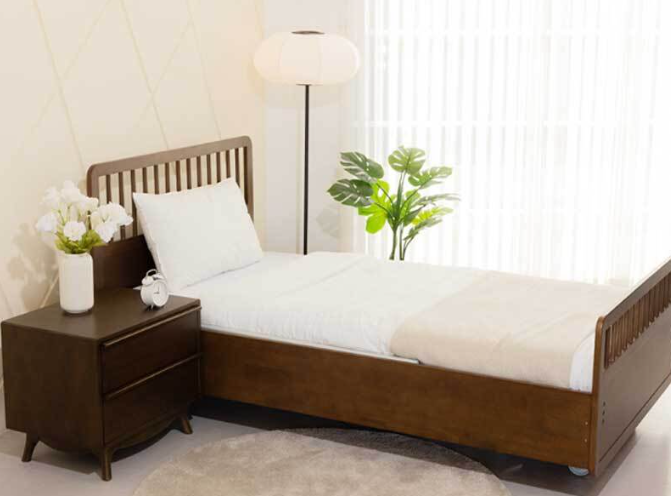
Home Care Grows into an Industry… “Growing into a Company Changing the Nursing Culture”
Mobe grew through word of mouth. Its success was particularly notable in that its products naturally spread after being installed in hospitals and nursing facilities. Patients who experienced the products installed in medical institutions repeatedly purchased the same products after discharge, generating new demand without the need for a separate, large-scale sales force. It was this experience that led us to view the home care market as a “new industry.”
CEO Oh explained, “Initially, we entered the market focusing on motion beds that improved sleep comfort, but actual consumption patterns were different from our expectations. Customers who came to view our beds increasingly asked, ‘Can the beds be used for rehabilitation?’ or ‘Is it suitable for nursing my mother?’ We realized that the market demand for motion beds was shifting toward nursing care, not sleep.”
◆A question that began at a COVID-19 hospital bed… “What about the health of caregivers?”
The specific direction of Mobe The Rest was fueled by CEO Oh's personal experience. During the COVID-19 pandemic, his father was bedridden for extended periods, requiring nursing care. He brought a motion bed into the home and began providing care, but the reality was different than he had imagined.
CEO Oh explained, "The existing motion bed's angle adjustment function was certainly helpful. However, gradually changing positions or moving the patient's body ultimately required the caregiver's own strength. My mother, in particular, complained of severe back and knee pain from changing my father's position every night." He continued, "The caregiver's back was slowly breaking. I felt this approach could not guarantee the sustainability of care."
This experience led to a complete reorientation of the product. While Mobe's existing motion beds focused on patient comfort, Mobe The Rest shifted its design focus to "simultaneous comfort for both caregivers and patients." This perspective led to the addition of the concept that a bed should not only be a device for laying patients down, but also a device that protects the caregiver's body and reduces caregiving labor.
Since then, CEO Oh has completely revised the structure and frame design of the Motion Bed. The bed top rotates at a certain angle to seamlessly connect with the wheelchair or walking aid. CEO Oh explained, "Instead of having to suddenly pick up and move a patient, we wanted to create a structure that allows caregivers to move the bed more easily."
Furthermore, an automatic position change function has been incorporated, significantly reducing the burden on caregivers who previously had to manually change positions throughout the night. The bed's height adjustment range has also been expanded. The angle of the upper and lower body lift and the range of elevation have been finely adjusted to allow for bathing, feeding assistance, and position changes without having to bend down too deeply.
Users can freely select the size, functions, and options to suit their individual circumstances and convenience. The OKIN actuators required for the motion bed can be configured with two, three, or four motors.
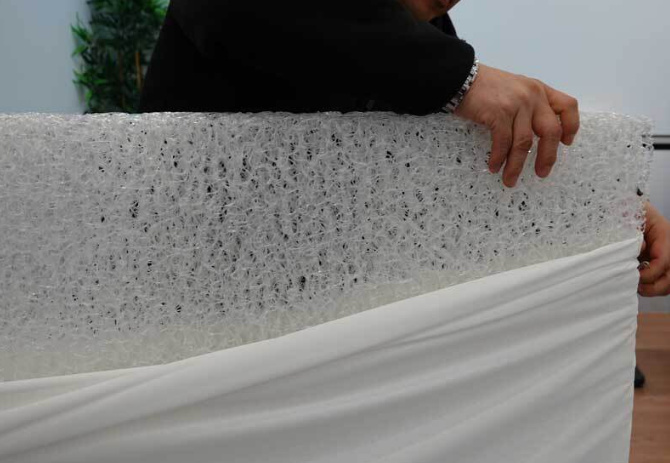
The design also intentionally avoids the feeling of a "hospital bed." The wooden headboard makes it look like a regular home bed. Convenience is enhanced by the inclusion of lighting, USB ports, and outlets. However, safety guards and auxiliary guards ensure safety.
This measure aims to minimize the psychological discomfort associated with hospital beds. CEO Oh emphasized, "Bringing a hospital bed into the home reinforces the perception that one is a 'patient.'" He added, "A nursing bed that blends seamlessly with the home's interior design also contributes to the patient's emotional well-being."
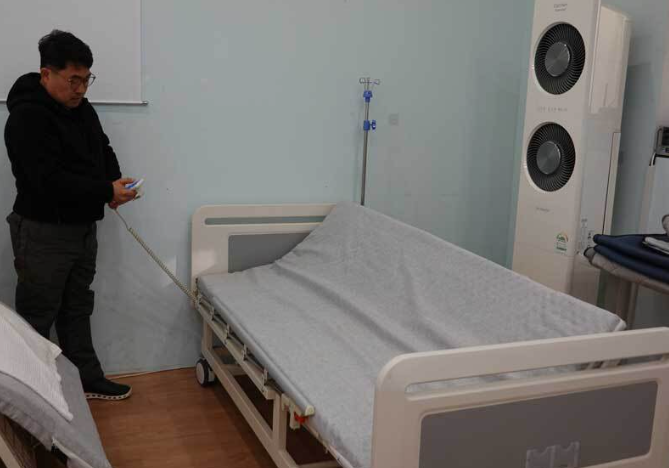
◆Integrating IoT and AI to Design a "Bed-Based, Non-Face-to-Face Medical Platform"
Mobe is also conducting research and development to evolve its beds into home healthcare platforms in the long term. The company is developing a system that automatically measures and transmits basic patient health data by attaching various sensors to the bed.
Mobe is developing a system that uses "Sleep Sensor" technology to detect biometric data such as respiration, heart rate, and weight during sleep and transmits it to an app. The system also includes features to detect nocturnal evacuation and apnea risks. The company plans to expand the bed into a data platform by integrating it with sleep quality analysis and health monitoring.
Mobe also applied "IoT Motion Control" technology, enabling bed angle and posture adjustments using voice commands alone. This automation, including changes in body position and independent adjustment of the upper and lower body, enhances usability, allowing even patients with limited mobility to operate the bed independently.
Mobe is also exploring a feature that integrates the collected data with a non-face-to-face medical treatment system, allowing doctors to remotely monitor changes in a patient's condition. A fall alert feature, which immediately notifies caregivers when a fall risk is detected, is also included in the long-term development project.
CEO Oh stated, "For patients in remote areas or those with limited access to long-term hospitalization, the bed at home could become the starting point for treatment. As the non-face-to-face treatment system becomes fully operational, home care beds will soon become a key point of contact for medical data."
◆Mobe's "Made in Korea" Motion Beds Turn Overseas
Mobe already has a branch in China and is preparing to expand into overseas markets, including Southeast Asia. CEO Oh explained, "Beds are an item with low cultural barriers," adding, "In any country with a hospital and nursing care system, there's an equally strong demand for home care beds."
He added, "We're in an era where 'Made in Korea' is becoming the standard in the home appliance and IT industries." He added, "Korea can also lead the way in motion bed technology. We aim to become the leading manufacturer of beds by directly manufacturing and advancing patent-based technologies."
Mobe's vision for the future is clear: elevating beds from a sleep aid to a home-based nursing infrastructure, elevating the quality of care provided at home.
CEO Oh Soo-han stated, "We are not simply a company that sells beds; we aim to become a company that transforms the form of nursing care and the structure of family health and care. By standardizing home care beds in Korea, we will become a pioneer in creating a new nursing culture."

Comfortable Care, Deep Rest MOBETHESHEEM
180-2 Seongseok-ro, Ilsan Dong-gu, Goyang-si, Gyeonggi-do (Seongseok-dong) Mobe Co., Ltd
Tel+82-10-4229-9296 Fax+82-31-977-9297 E-mailmobe_motionbed@naver.com


Copyright (c)MOBETHESHEEM. All Rights reserved. Designed by WebSite.co.kr